






The strongest monopolies of the world, with a media and political influence omnipresent in the USA are promoting a campaign in no way innocent. Showing Artificial Intelligence (AI) as a revolution of the global economic infrastructure, that will, in theory, transform the value chains, labour productivity and our everyday lives in every possible aspect they sidestep other grave consequences: the enormous social, political and military control which this technology provides to the ruling class and, above all, uncontrolled speculative bubble that it has caused.
The expectation surrounding AI is deafening, amplified by stock market listings and multi-billion-dollar contracts signed by leading figures in the industry such as Elon Musk (SpaceX), Sam Altman (OpenAI), Jensen Huang (Nvidia), Larry Ellison (Oracle), and many others, all of whom also enjoy the strategic backing of the Trump administration. But not everything that glitters is gold.
As an industry worth trillions of dollars is examined, an increasing number of studies and respected experts are raising concerns about this industry. They ask whether the massive investments being poured into this new "holy grail" of capitalism are truly justified given the relatively modest returns achieved so far. Comparisons between today's AI-driven stock market boom and the bursting of the dot-com bubble in 2000, and especially the so-called "virtuous cycle" that culminated in the collapse of the subprime mortgage market and the Great Recession of 2007-2008, are becoming increasingly common.
That private ownership of the means of production and the existence of national borders act as a constraint on the development of the productive forces, and that the dictatorship of finance capital constrains, paralyzes, and prevents new technologies from realizing their full productive and creative potential, is something that history has repeatedly proved.
The emergence of AI also confirms another diagnosis made by the great theorists of scientific socialism: incorporating technological and scientific advances into the global productive process, under this stage of state-monopoly capitalism, does not expand collective well-being or social equality. Nor does it shorten the working day, raise wages, or improve the quality of "democracy."
From a Marxist perspective, the problem does not lie in technological innovation or scientific progress themselves, but in who controls them and for what purposes. That is the central issue. As long as the capitalist system is still standing, humanity's remarkable scientific achievements will only deepen its internal contradictions: the exploitation of wage labor will intensify, billions of men and women will struggle desperately to survive, while a handful of global oligarchs accumulate obscene amounts of wealth and the dictatorship of finance capital grows ever stronger.
The Speculative Bubble Is Real
For now, the AI industry has unleashed a speculative frenzy marked by clear irrationality. Nobody now disputes that an investment fever has taken hold, with enormous sums flowing into AI ventures. This demonstrates that trillions of dollars in idle capital are moving collectively toward niche sectors that are expected, hypothetically and in the future, to generate returns far greater than those available in traditional manufacturing. But here lies one of the core problems: those exceptional returns simply do not exist to justify such an enormous level of overinvestment. This, in turn, is a clear symptom of the underlying crisis of overproduction.
What an article published by Business Insider in May says of this problem is very interesting:
"In July [2025], a study by the Massachusetts Institute of Technology (MIT) put a spotlight on a debate that had been brewing in financial markets for months: 95 percent of companies that had invested in generative AI had obtained no measurable return. The research examined 300 business initiatives and revealed what its authors called the generative AI gap: while a small minority of companies are extracting millions of dollars in value, the overwhelming majority remain stuck in pilot projects with no meaningful impact on their financial performance. American companies had collectively invested between $35 billion and $40 billion in these initiatives, and almost all of that money had produced nothing quantifiable.
Another concern among more critical analysts is the financial structure holding up much of this investment. The circular transactions taking place among the major technology firms resemble the practices seen during the dot-com bubble, when companies purchased services from one another in order to inflate reported income. Nvidia invests in OpenAI, which then uses much of that money to purchase Nvidia's own chips. Microsoft owns 27 percent of OpenAI and accounts for nearly one-fifth of Nvidia's revenue. Nvidia, meanwhile, has guaranteed that it will purchase whatever CoreWeave is unable to sell through 2032. This web of cross-dependencies makes it extremely difficult to determine how much actual demand for AI is genuine and how much is simply the result of a closed money circuit, money circulating among the same group of people."[1]
Other headlines emphasize the same point:
"AI companies aren't even trying to be profitable—they're burning cash in an endless race."[2]
"Economist Niño Becerra warns about AI: 'If 96% of investment has produced no return, that's extremely serious.'”[3]
"AI companies lack a viable business model or real substance to support their valuations. A stock market crash would have enormous consequences for the world."[4]
"Goldman Sachs cools AI enthusiasm: after two years and hundreds of billions of dollars, its chief analyst says the business case still hasn't been proven."[5]
OpenAI, one of the industry's strongest firms, recently announced losses of $38.5 billion in 2025. Nvidia represents perhaps the most emblematic case. By May its stock market value had surpassed $5 trillion, greater than Germany's entire GDP, even though some of its key projects had failed, such as entering the Chinese market with its latest-generation microchips.
When Elon Musk's company SpaceX went public on Wall Street, it raised a record $75 billion in a single day, nearly three times the previous record held by the oil company Saudi Aramco. This occurred despite the fact that SpaceX generated only €17 billion in revenue the previous year while posting losses of €4.25 billion, even with the lucrative contracts it had secured from the Trump administration.[6]
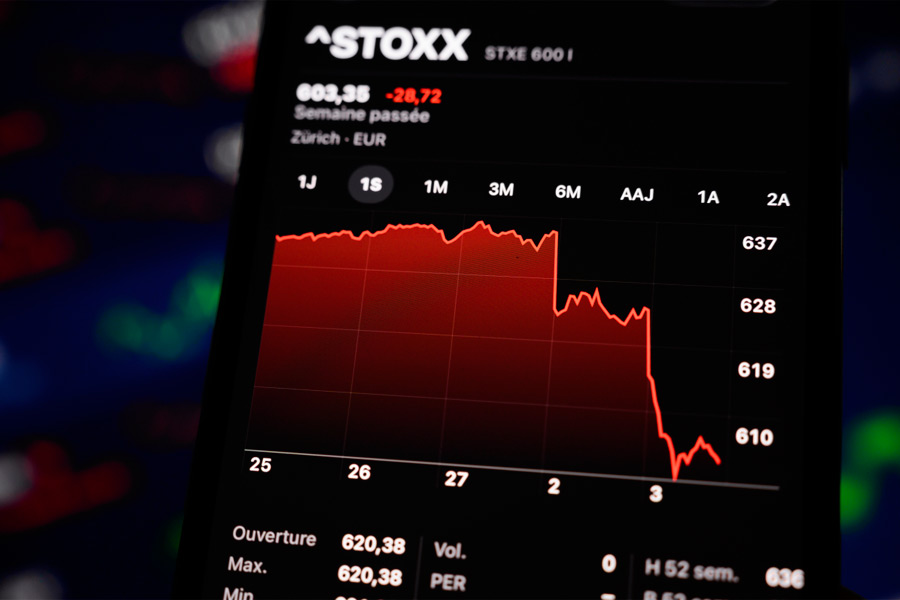
Another example is the semiconductor company Broadcom, which recently reached an agreement with Google to develop AI technologies. At the beginning of June 2026, it lost as much as 20% of its market value [7] after second-quarter results were well below expectations, exemplifying the broader slowdown in the semiconductor industry.
If we take the eight leading companies in the sector, Nvidia, Apple, Alphabet, Microsoft, Amazon, Broadcom, TSMC, and SpaceX, their combined market capitalization reached $26 trillion, exceeding China's GDP and near that of the USA .[8] These figures obviously bear little relationship to the actual production of goods or to the profits generated through AI.
The extreme volatility of these stock prices is evidence of the speculative nature of the bubble. On Tuesday, June 23 alone, the semiconductor index (SOX) fell 6.8%, wiping out $680 billion in market value[9]. Such an outstanding number pales in comparison to other figures. A recent article in the financial newspaper Cinco Días shows the magnitude of this chaos.
"The major technology companies suffered a harsh reality check in June, triggering a sharp stock market decline. The so-called Magnificent Seven (Nvidia, Apple, Microsoft, Alphabet, Meta, Amazon, and Tesla) lost around 10 percent of their value in their largest correction since March 2025. In absolute terms, this represented $2.3 trillion (roughly 2 trillion euros) in lost market capitalization, coinciding with the month of SpaceX's stock market debut."[10]

Data Centers
Instead of rational and coordinated cooperation aimed at maximizing investments and resources, there is an all-out war to produce semiconductors. From China's approved $150 billion to develop its domestic semiconductor industry and reduce dependence on foreign suppliers to the United States $52 billion through the CHIPS Act, and the European Union’s planned investment of $43 billion. A global scramble is underway to secure control over this essential "raw material."
As one analysis explains:
"One of the trends emerging in the sector is a rotation away from the so-called hyperscalers—companies such as Amazon, Meta, and Microsoft that are building AI data centers—and toward companies specializing in chip manufacturing, such as Nvidia. Nvidia's shares have gained 4.5 percent this year (despite the June correction), while Microsoft's stock has fallen 24 percent. In the AI gold rush, more and more investors prefer to buy shares in the companies making the picks and shovels rather than betting on the miner who might strike gold
The performance of chip and memory manufacturers has been extraordinary. SanDisk has risen roughly 760%, Intel has tripled in value, and South Korea's SK Hynix has increased by around 300%. Demand for processing chips remains extremely high, and shortages of memory components are expected to continue until 2028."[11]
The second essential pillar of the AI production chain is data centers. Here, the expectations generated by the industry contrast sharply with reality and progress is not keeping pace with the gargantuan number of projects that have attracted these multibillion-dollar investments.
According to one report:
"The investments that technology giants are making in data centers are unprecedented. According to data compiled by ING, the five largest hyperscalers, including Alphabet and Oracle, have committed spending of $713 billion in 2026, $907 billion in 2027, $991 billion in 2028, and more than $1 trillion in 2029."[12]
A detailed report published by Tech Insider, cited below, explains just how far these projects are from becoming reality, the infrastructure problems and the bottlenecks that are emerging.
"Half of the AI data centers planned in the United States are being delayed or canceled…
Bloomberg's latest report, summarized by Tom's Hardware, confirms that of the roughly 12 GW of data-center capacity planned for 2026, only about one-third is actually under construction. The remaining projects face delays ranging from several months to several years. Most importantly, the primary bottlenecks are no longer GPUs or chip allocation. Instead, the shortages involve transformers, electrical switchgear, and batteries. Equipment with extremely long manufacturing and backorders that extend well beyond the typical 18-month construction cycle for a data center.
Financial commitments, however, have not readjusted. Alphabet, Amazon, Meta, and Microsoft still intend to invest more than $650 billion in AI infrastructure during 2026, even though some projects may have to wait as long as five years before they can be connected to the grid. The result is the largest gap ever recorded between announced AI capital expenditures and the amount of electrical capacity actually available. The money has been committed, but the physical infrastructure necessary to use it remains years behind schedule.
Against an announced pipeline of 16 gigawatts planned for 2026, only around 5 gigawatts are actually under construction. Furthermore, between 30 and 50 percent of the U.S. data-center projects planned for 2026 are expected to be delayed or canceled.
A shortfall of 7 gigawatts is far from an abstract number. Given the typical size of hyperscale AI campuses (between 100 and 300 megawatts each), this missing capacity corresponds to approximately 30 to 70 major AI training facilities that had been promised but cannot be delivered in a timely manner. Each of these campuses represents between $1 billion and $4 billion in capital expenditure. Consequently, tens of billions of dollars in construction spending are being postponed from 2026 into later years. That capital is not disappearing. It is being pushed into 2027 and 2028, compressing future construction schedules and placing even greater pressure on suppliers of electrical equipment, whose production capacity is already strained.
Despite these construction delays, the four largest U.S. cloud providers (Alphabet, Amazon, Meta, and Microsoft) are still expected to invest more than $650 billion in expanding their AI infrastructure during 2026. This figure is striking because it has remained stable even while nearly half of the planned American data centers have encountered delays or cancellations.
The problem is therefore not a lack of commitment from big capital. Rather, it lies in converting announced investments into actual electrical capacity, and then converting that electrical capacity into functioning GPU clusters.
For shareholders, this raises significant concerns. Capital expenditure forecasts assume that these investments will quickly become productive assets. But when billions of dollars are committed while the underlying facilities are delayed by 12 to 24 months, it’s mandatory to revise depreciation schedules, expected returns on investment, and projected AI revenue growth. Analysts at Bernstein, TD Cowen, and Goldman Sachs have all identified this mismatch as a hidden financial risk for 2026.
The measly third of Sightline Climate projects under construction seems discouraging at first sight, but the underlying reality is much less favourable. A big part of projects that have begun their construction are still in their early stages: foundation work, the installation of utilities or the securing of interconnection agreements. Only a small sample have sufficient progress to be put to work before the end of 2026. In practice, the report concludes, the proportion of the announced 12 GW of capacity that actually becomes energized by the end of 2026 may be closer to 20 % than to 33 %.”[13]
AI and the financial sector
All of this demonstrates that the enormous investments flowing into AI are not being matched by corresponding productive activity. Instead, the core of today's AI business is increasingly tied to highly speculative financial activity that has become deeply intertwined with the broader financial system. As the Bank for International Settlements (BIS) has observed:
"Investment in AI infrastructure, particularly data centers, has grown rapidly and now represents a substantial share of investment in advanced economies. In this context, major U.S. technology companies, so-called hyperscalers, have dramatically accelerated their capital expenditures. Because these expenditures greatly exceed their traditional investment levels, an increasing share of the spending is being financed through loans.
Corporate bond markets have become the principal source of funding. Gross bond issuance surpassed $100 billion in 2025, with most of these bonds carrying maturities of more than five years in order to finance infrastructure projects spanning various years. However, credit default swap (CDS) spreads have risen, particularly for companies with weaker credit ratings, reflecting both the sheer volume of debt issuance and growing uncertainty regarding the profitability of these investments.
Alongside conventional bonds, hyperscalers have relied on off-balance-sheet financing to fund infrastructure expansion, frequently in partnership with private credit firms. A common arrangement involves the creation of a special-purpose entity or joint venture that acquires or develops data-center assets.
These arrangements amount to a form of shadow borrowing, financial obligations that are economically equivalent to debt but remain largely outside corporate balance sheets."[14]

The outlook is troubling. The amount of financial engineering involved recalls previous periods of speculative excess. But for plutocrats such as Elon Musk, and for the banks and investment funds that play a central role in this speculative frenzy the focus is on short-term profits. As long as money continues to flow, there is little incentive to give importance to warnings, even when those warnings come from within the ranks of the ruling class itself. We cite several recent reports illustrating these concerns:
"In a report the European Central Bank (ECB) stated that if private credit continues to grow rapidly as a source of financing for AI companies and data centers, European investors could suffer losses if the technology fails to meet expectations."[15]
Another report warned:
"The global financial regulator has warned about the AI boom being fueled by the private credit industry.
AI accounted for more than one-third of all private credit transactions in 2025, compared with just 17 % over the previous five years.
'This concentration in specific sectors may expose private credit funds to idiosyncratic risks and increase their vulnerability to regional or sector-specific crises,' the report highlights.
The valuation of AI companies could come under pressure if investment creates an oversupply of data centers that ultimately exceeds demand for AI services, resulting in returns well below investors' expectations. The FSB report worsens the concerns about the growing role of private credit institutions, which lend using investors capital rather than traditional bank deposits. These worries about these potentially risky loans have already triggered billions of dollars in investor withdrawals from several private credit funds, forcing some firms to restrict how much money clients are allowed to employ.
Meanwhile, traditional banks have become increasingly exposed to the private credit sector, either by lending directly to private credit funds, financing riskier fund portfolios, or lending to companies that themselves rely on financing from private credit institutions. At the same time, a growing number of banks are partnering with asset managers in private credit transactions.”[16]

As this last report suggests, the AI boom is becoming closely linked to the opaque $3 trillion private credit market, which is already beginning to experience serious liquidity problems. A recent BBC report highlighted this trend:
"Several credit funds have reported losses or restricted investors' ability to withdraw their money. BlackRock, Blackstone, Apollo, and Blue Owl have all faced requests for billions of dollars in withdrawals from their private credit funds (...) Sarah Breeden, Deputy Governor of the Bank of England, observed: 'Private credit has grown from virtually nothing to two and a half trillion dollars over the last 15 to 20 years. There is leverage (lent money), opacity, complexity, and extensive links to the rest of the financial system. All of this resembles what we saw during the global financial crisis.'(...)
Mohamed El-Erian, chief economic adviser to the German finance firm, Allianz and former CEO of PIMCO, the world's largest bond investor, has similarly argued that the risks of another crisis are being underestimated: 'There are certain similarities with 2007 that keep me awake at night. There are clear fragilities within the financial system that are not being properly analysed. Suddenly, the system becomes flooded with private lenders eager to lend money to companies. Companies see all this available capital, and, as always, too much money leads people to make mistakes.' "[17]
Lessons not learnt
This excess of available capital reflects the underlying crisis of overproduction that lay behind the last financial crisis and the Great Recession of 2007–2008. Nearly twenty years later, a remarkably similar dynamic is unfolding. Instead of the real estate market, the speculative focus is now artificial intelligence, but the mechanism remains much the same: pushing capitalist markets far beyond the limits imposed by the productive economy. The similarities with the subprime mortgage bubble, particularly the intricate financial interconnections at the heart of the system, are striking. Although, the numbers behind today's AI bubble are even more gigantic than those of 2008.
The share prices of major technology companies, especially in the United States, continue to rise even though their market valuations bear little relationship to corresponding increases in production or actual sales revenue. Unsurprisingly, this process has also produced an unprecedented concentration of capital, surpassing that of any other time:
"In 2025, the dramatic surge in AI-related companies pushed the major U.S. stock indices to valuation levels historically associated with periods of significant financial vulnerability. The cyclically adjusted price-to-earnings (CAPE) ratio of the S&P 500 has reached levels comparable to those seen immediately before the dot-com bubble of 1999-2000, and even above those preceding other major market corrections, including 1929 and 2008.
As a consequence, a small group of companies, including Nvidia, AMD, Alphabet, Microsoft, Meta, Amazon, Tesla, and Broadcom, now accounts for roughly 40 % of the total market capitalization of the S&P 500, compared with approximately 15% represented by the eight largest companies just a decade ago according to figures cited by investment bankers.
This concentration means that the performance of only a handful of firms now has a decisive influence on the entire U.S. stock market. A correction affecting these companies could therefore spread almost automatically throughout the broad[18]er market.”
This enormous mountain of financial speculation will, sooner or later, have to reconcile itself with the realities of the productive economy. The longer that adjustment is postponed, and the greater the accumulated contradictions become, the more severe the eventual correction will be.

A Revolution in Productivity?
In the first volume of Capital, Karl Marx described the effects of new technology and large-scale machinery on human labor. He explains that as mechanization became widespread, it increased not only productivity but also the proportion of fixed capital invested in production, thereby raising what he called the organic composition of capital. At that point, capitalism would require countervailing forces to offset the resulting tendency for the rate of profit to decline.
That is why, the incorporation of large-scale technology has amplified the division of labour, but this phenomenon has resulted in a reduction of workers wages, a lengthening of the workday and an increase in production, raising exploitation for a larger appropriation of absolute and relative surplus value. In this way, workers end up getting a lower percentage of socially produced riches while technology increments it at a gargantuan rate.
During the first months of 2026, major technology companies, banks, and consulting firms announced a tsunami of job cuts[19]. Microsoft, Oracle, Unity, Meta, Amazon, Pinterest, and the list continues to grow. In the United States alone, more than 92,000 workers were affected between January and April 2026. In addition, hiring in several industries has virtually frozen since at least 2025.[20]
A significant portion of these layoffs is attributed directly to the implementation of AI, although some are also the result of outsourcing and offshoring. In industries centered on software development, data storage and management, IT maintenance, retail logistics, printing, design, internet services, and social media, AI has clearly reduced the time required to complete projects and commercial processes, allowing companies to operate with fewer workers.
At the same time, these layoffs among highly skilled employees, many of whom once appeared to enjoy secure employment and good salaries for life, illustrate what Marx predicted regarding the progressive impoverishment of the working class and its reduction to little more than an appendage of the machine. Under capitalism, technology does not liberate workers; it subjects them to even greater forms of exploitation.
We, however, should be cautious about drawing overly simplistic conclusions. In many industries it is relatively easy to reduce staff by eliminating junior positions (programmers, designers, analysts, and other employees who are beginning their careers and possess less experience and productivity) But it is far less clear that such a strategy can be applied on a massive scale while remaining profitable given that large monopolistic corporations routinely rely on subcontracting and offshore production, using thousands of smaller firms that employ low-paid, precarious labor. These subcontractors form an essential part of global value chains and account for a substantial portion of large corporations' profits by reducing costs. Amazon is a particularly revealing example of this model.[21]
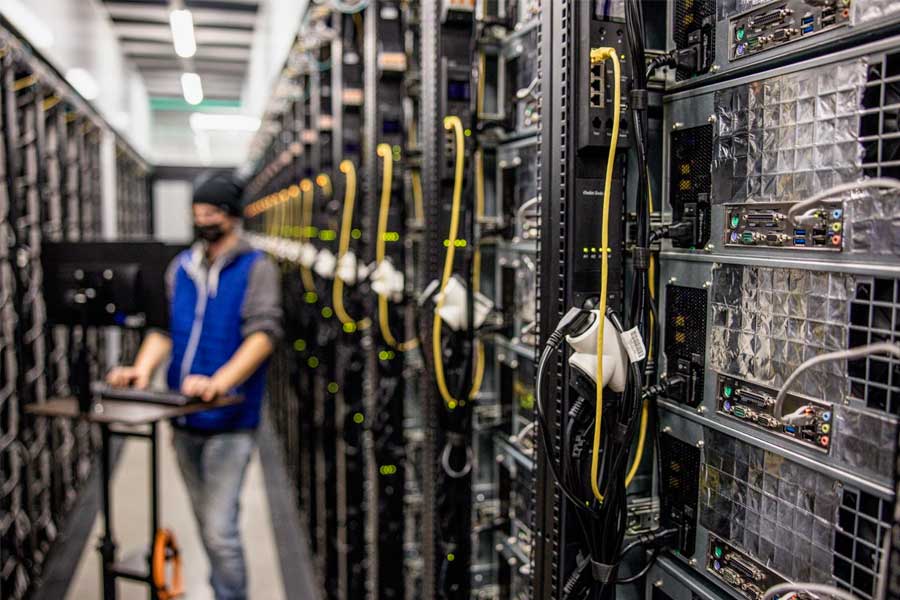
Because AI requires enormous capital investment, it will function most effectively in those segments of large monopolistic corporations that can afford to deploy it. Yet the industry's promises of a dramatic revolution in global productivity have not materialized. It remains an observable fact that savings on labor costs do not necessarily offset the enormous investments required to implement AI on a large scale. For example, intensive professional use of AI by a single researcher may cost around $100,000 per year and that will still have to be revised and the researchers supervised[22]. The cost of operating these systems can approach the salary required to employ a Stanford PhD researcher directly.
The overall impact of AI on productivity therefore remains uncertain. One thing, however, is clear: the potential productivity gains are constrained by the overwhelming dominance of finance capital. At present, the promise of future productivity increases is used to pressure workers into accepting lower wages. The data confirms this:
"Behind every AI model promising efficiency, security, or innovation stand thousands of data labellers and content moderators who train these systems by performing repetitive, and often psychologically damaging, tasks. Many of these workers live in the Global South and spend eight to twelve hours a day reviewing hundreds or even thousands of images, videos, and datasets, including graphic material depicting rape, murder, child abuse, and suicide. They work without adequate breaks, paid leave, or mental health support. In some cases, they earn as little as two dollars per hour. Bound by strict non-disclosure agreements, they are prohibited from discussing their experiences."[23]
It is equally important to examine AI's impact on productivity across the whole productive web. Here, significant doubts emerge about the size of this transformation. Numerous studies suggest that while AI has improved productivity in certain sectors, its broader economic impact remains constrained by serious limitations.
"A new report by the consulting firm Gartner has raised serious doubts on the strategy of replacing workers with AI. Based on surveys of executives at large organizations with annual revenues exceeding one billion dollars, the research found that workforce reductions have not produced the financial benefits many expected. Most surprisingly, companies that laid off employees performed almost identically to companies that did not (...)
However, when analysts examined which companies were achieving the strongest financial performance, they found no significant difference in return on investment between firms that had dismissed large numbers of employees and those that had retained their workforces. As Gartner analyst and vice president Helen Poitevin concluded, 'There is no connection or correlation between achieving a return on investment (ROI) and carrying out layoffs.'"[24]
"The rapid expansion of artificial intelligence in companies around the world appeared to herald a radical transformation of productivity and labor markets. However, a new report from Oxford Economics tempers that enthusiasm. Although adoption of these technologies is growing rapidly, their actual economic impact remains limited."[25]
We don’t intend to imply that AI can’t cause higher productivity, in a regime of social workers democracy it would be so, but under the laws of the capitalist market, where short-term benefits are crucial, the increase in productivity could prove scarce. If capitalists can obtain large benefits without relying on the productive process they will do as such. Even if this entails generating fictitious capital that limits the increase in productivity that a technology like AI could bring.
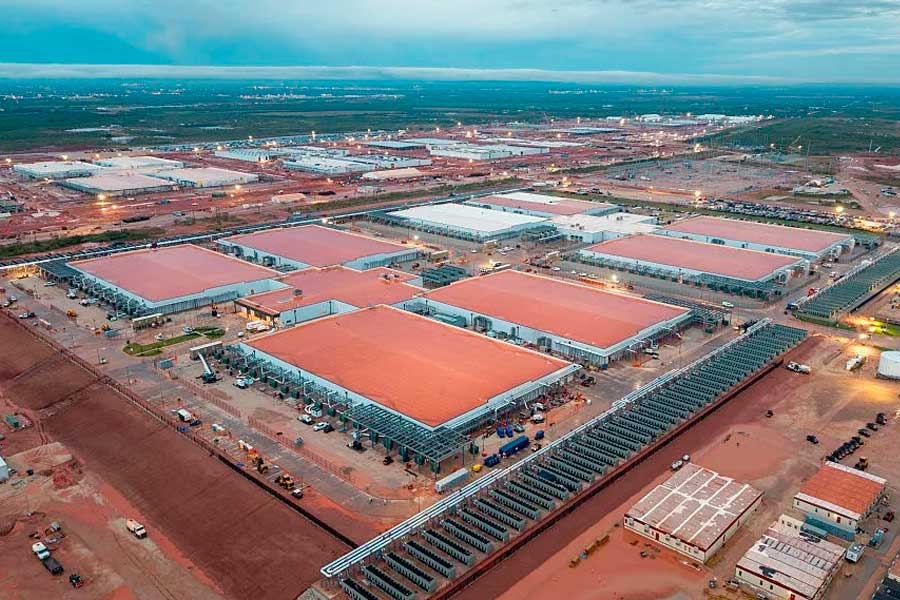
The use being made of AI is conditioned by the real computation capability of data centers that sustain the technology. Their construction, as we’ve seen, suffers from delays and cancellations, on top of relying on absurd quantities of water and energy in a context of price increases. As some specialists emphasize, the costs for a professional and intensive use of AI could reach astronomical levels, shrinking demand and toppling the sector's expectations.
"The economics of AI are questionable, to put it mildly. Large language models are extraordinarily expensive to build and costly to maintain. So far, AI companies have heavily subsidized the price of tokens, the basic unit of computation for AI models. According to Panmure, OpenAI's inference costs, the process by which trained models apply what they have learned to new data, far exceed its revenues. These losses cannot continue growing indefinitely. OpenAI recently shut down its video-generation model, Sora, because it was costing more than $5 billion per year, according to Julien Garran of The MacroStrategy Partnership. Last month, GitHub, Microsoft's software development platform, announced that it was abandoning its flat monthly subscription in favor of usage-based billing."[26]
In short, a productivity revolution that is more than mere propaganda would require such enormous productive investment that it would be difficult to make profitable at today's prices for the services and infrastructure involved. Even then, these technologies would remain accessible only to a limited segment of the largest capitalist monopolies, excluding a substantial portion of the productive economy.
AI, capitalism and militarism
AI has already become a crucial instrument in the struggle for global hegemony. As demonstrated on the battlefields of Ukraine, during the Zionist genocide against the Palestinian people, and in the recent imperialist aggression against Iran and Lebanon, AI will be employed extensively to reinforce barbarism.
The speculative character of the AI boom should not obscure the fact that its greatest successes are occurring in the business of imperialist war: weapons production, espionage, police repression, and, of course, the dissemination of racist, neo-fascist, and misogynistic propaganda as a tool of political, ideological, and cultural control through social media. The major technology corporations occupy a central position within the existing bourgeois order and are fully integrated into the increasingly authoritarian projects of significant sections of the ruling class. They are helping construct an Orwellian world of surveillance, control, and destruction, one perfectly suited to the ambitions of Donald Trump and his followers.
Contemporary capitalism has a profound interest in using AI to process massive quantities of satellite data and information collected through digital devices in order to strengthen its capacity to dominate the population, monitor political opponents, and persecute and criminalize the militant left. In this period of imperialist decline, parliamentary democracy can no longer guarantee social peace in the way it once did. Increasingly authoritarian and repressive strategies have become essential for maintaining rising profit rates through intensified exploitation of labor. The crisis of the traditional forms of bourgeois rule, together with the advance of far-right political movements, find in AI a valuable instrument.
It is no coincidence that the CEOs of the largest technological companies are among the most fanatical reactionaries, outspoken misogynists, and promoters of authoritarian ideology. The rise of these technological fascists reflects the present historical period, in which the bourgeoisie is casting aside its democratic appearance and showing itself ever more determined to crush the workers' movement.
Palantir has exploited this niche more successfully than any other company, benefiting enormously from CIA investment. Its technologies have played a particularly prominent role during the U.S. imperialist aggression against Iran and during the Zionist assault on Gaza, where AI has been used to automate target selection and control military drones. War is one of the few areas in which AI has already proven highly profitable. The imperialist enthusiasm of Elon Musk and Palantir CEO Alex Karp is proportional to the enormous profits they derive from unprecedented destruction and the killing of hundreds of thousands of innocent people.

This same company published a manifesto in April outlining its political principles: an unrestricted predatory capitalism and the complete domination of the financial oligarchy. It amounts to an explicit acknowledgment of what Lenin described in Imperialism, the Highest Stage of Capitalism. Its authors advocate the direct and personal exercise of power through Bonapartist and authoritarian governments, aggressively criticize liberal democracy, and enthusiastically celebrate American imperialism. In essence, they call for the dictatorship of financial and technological capital, enforced through systems of surveillance and repression made possible by AI on a scale unprecedented in history.
Yes, these fascist billionaires represent a genuine threat to all of humanity's progressive achievements. What they cannot escape, however, is the fact that behind the mass production of robots and advanced data-processing technologies still stands the working class, the wage slaves of the entire world. The failure of American imperialism in its military aggression against Iran offers a clear example of the limits of these technologies, however sophisticated they may be.
AI and the fight for socialism
Obviously, opposing AI in general, or the potential progress it represents, makes no sense whatsoever. The problem is not AI itself, but the capitalist system under which it is being developed. AI's potential is enormous, and we are only at the beginning of its development, as many of its recent achievements already suggest.
One of the most revolutionary breakthroughs of recent years has been solving the problem of protein folding, a biological mystery that puzzled scientists for more than half a century. Two AI systems, AlphaFold and BioEmu, have succeeded in predicting the three-dimensional structure of virtually every protein known to science. This dramatically accelerates the design of targeted medicines, the understanding of rare diseases, and the creation of artificial enzymes capable of breaking down plastics.
Predictive oncology has also become possible through AI models that analyze medical images (for example mammograms and large-scale pathology slides using systems such as GigaPath) allowing cancer cells to be detected years before they become visible to the human eye and enabling personalized preventive treatments. More recently, an AI-assisted coronavirus vaccine has been developed that provides immunity against all known variants of the virus, rather than targeting only a specific strain as previous vaccines did.
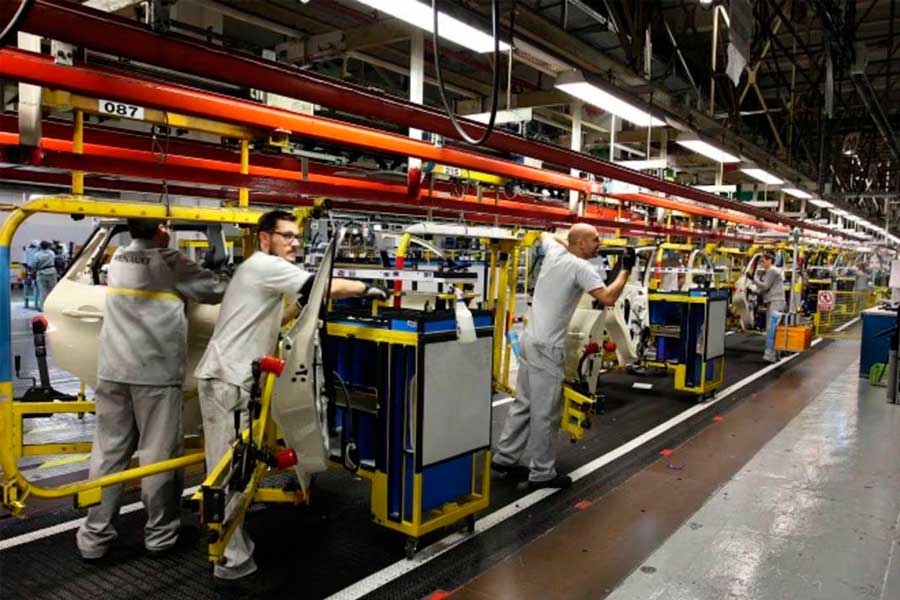
AI will also play a decisive role in the discovery of new materials. Research that once depended on years of laboratory trial and error can now be accelerated through large-scale simulations. For example, predictive models such as Microsoft's MatterGen have evaluated more than 32 million chemical combinations in a matter of weeks, leading to the discovery of a new material that could reduce lithium use in batteries by as much as 70%. Similarly, AI is helping identify optimal molecular structures for new superconductors capable of conducting electricity without resistance at increasingly practical temperatures, developments that could transform electrical grids and nuclear fusion research.
Climate AI systems such as Aurora already outperform traditional numerical weather supercomputers. They can forecast extreme weather events in seconds rather than hours while improving early-warning systems for natural disasters. For example, they have successfully predicted sandstorms in the Middle East a full day in advance, allowing preventive measures that reduce damage.
AI is also producing a revolution in mathematics, not by replacing mathematicians but by acting as a collaborator that dramatically expands their capabilities and opens entirely new paths of mathematical discovery. For example, AlphaProof and AlphaGeometry, developed by Google DeepMind, combine reinforcement learning with formal language processing. In 2024 they performed up to the level of a silver medalist at the International Mathematical Olympiad (IMO), solving four of six exceptionally difficult problems in record time.
At the end of May 2026, an advanced reasoning model developed by OpenAI solved the unit distance problem in the plane (Erdős's Unit Distance Conjecture), a famous problem in combinatorial geometry originally proposed by the Hungarian mathematician Paul Erdős in 1946 (precisely 80 years ago). The system solved it autonomously, astonishing the scientific community with the unexpected strategy it employed.
The possibilities opened by these applications are extraordinary across every branch of knowledge. Yet their practical development is constrained by a system organized not around scientific progress or social needs, but around maximizing the profits of capitalist oligarchs. That fact, in itself, also limits AI's own development and application.
Another field in which AI could become genuinely revolutionary is the struggle against climate change. However, because of the overwhelming power exercised by capitalist monopolies, AI is currently contributing not to environmental protection but to environmental destruction. Its immense energy consumption is accelerating ecological degradation, generating millions of tons of electronic waste and intensifying highly polluting extractive industries.
A recent report by United Nations researchers concludes: "By 2030, the water consumption associated with artificial intelligence will equal that used by 1.3 billion people in sub-Saharan Africa. AI will also require nearly three times the annual electricity consumption of Pakistan, Bangladesh, and Nigeria combined, countries with a total population of approximately 650 million people. Carbon dioxide emissions could reach 400 million tons, comparable to the total annual emissions of the United Kingdom. AI infrastructure and its supply chain will occupy approximately 14,500 square kilometers, twice the metropolitan area of Jakarta, home to more than 32 million people, or ten times the size of Mexico City."[27]
Under capitalism, AI not only intensifies the exploitation of workers but also accelerates the plunder of nature to an extent that threatens humanity's previous achievements. Dominating an uninhabitable world is hardly the purpose of science.
The liberation this technology could offer humanity can only become reality under a different social order. Under socialism, a system democratically managed by workers, in which private profit is no longer the driving force of production, the impact of AI would be overwhelmingly positive. Together with robotics innovation more generally, AI could optimize industrial and logistical processes and make it possible to reduce the working day to five or six hours. It could be used to reduce the consumption of natural resources and energy. Its applications in biotechnology, physics, and chemistry could improve recycling while reducing the toxicity and persistence of human-made pollutants such as microplastics. Its positive applications could outweigh its negative impacts.
None of this, however, can occur under a system ruled with an iron fist by the capitalist plutocracy. It requires democratic planning and management on a large scale, pursued over the long term and consciously directed toward sustainability and the satisfaction of social needs.
Marx and Engels wrote in The Communist Manifesto: "The bourgeoisie, during its rule of scarcely one hundred years, has created more massive and more colossal productive forces than have all preceding generations together. The subjection of nature's forces to man, machinery, the application of chemistry to industry and agriculture, steam navigation, railways, electric telegraphs, the clearing of whole continents for cultivation, the canalization of rivers... What earlier century could have suspected that such productive forces slumbered in the lap of social labor?"

Twenty-first century Marxists can add to Marx and Engels' list of productive forces that once "slumbered within social labor" the internet, robotics, and artificial intelligence, and marvel at their potential to transform the face of the Earth just as Marx and Engels marveled at the technologies of their own age.
Opposing the development of AI would be both futile and absurd, and entirely contrary to Marxism. A scalpel can save a life in the hands of a surgeon or take one in the hands of a murderer; in neither case is the scalpel itself responsible for how it is used. Capitalists already have a roadmap for AI: to multiply their capital while refining the instruments of war, surveillance, and repression.
But AI could serve exactly the opposite purpose. Within a planned socialist economy, it could become a powerful tool for improving the lives of billions of men, women, and children. It would provide workers with more free time for democratic participation, art, culture, sport, and time with their loved ones. It would accelerate scientific progress and restore harmonious relations between humanity, productive activity, and nature.
By placing this technology at the service of collective well-being rather than private profit, humanity could move toward that "leap from the realm of necessity into the realm of freedom."[28]
Notes:
[1] ¿Hay realmente una burbuja de la IA? Esto es lo que dicen los datos
[2] Las empresas IA ni siquiera están intentando ser rentable: están quemando el dinero en una carrera sin fin
[3] Niño Becerra alerta sobre la IA: "Si el 96% de la inversión no ha tenido retorno, es muy gordo"
[4] "Las empresas de IA no tienen plan de negocio o sustancia real para sostener su valor. Una caída bursátil tendrá efectos enormes para el mundo"
[5] Goldman Sachs enfría la euforia de la IA: dos años y cientos de miles de millones después, su jefe de análisis dice que el negocio sigue sin demostrarse
[6] A pesar de estrenarse en bolsa con una subida del 19%, en las semanas siguientes perdió todo el valor ganado cayendo un 24%.
[7] Un informe de ganancias inferior al esperado de Broadcom y los ataques de Irán a un aliado de EE. UU. pusieron fin a la racha récord del mercado.
[8] SpaceX, Anthropic, y los chips: la explosión de la IA ensancha el club de los siete magníficos
[9] Índice Nasdaq: colapso de las acciones de semiconductores genera análisis bajista mientras las tecnológicas divergen
[10] Las tecnológicas pierden dos billones en el mes de Space X: “Las valoraciones eran insostenibles”
[11] Ibid
[12] Ibid
[13] Half of U.S. AI Data Centers Delayed or Canceled: Inside the 7 GW Capacity Crisis Reshaping a $650B Buildout
[14] Financing the AI infrastructure boom: on- and off-balance sheet borrowing
[15] ECB says private-credit fuelled AI boom poses risk to financial system
[16] Global finance watchdog warns over private credit industry fuelling AI boom
[17] A fresh financial crisis may be coming - it won't play out like the last one
[18] Wall Street: La burbuja de la IA lleva al S&P a niveles de 1929
[19] De Oracle a Capgemini: por qué se aceleran los despidos por la IA y quiénes son los más afectados
[20] Antes de que Genie 3 pusiera patas arriba todo, la industria del videojuego ya era consciente de algo: su crisis total
[21] La IA generativa reduce salarios y oportunidades para empleos de nivel inicial
[22] Las facturas de IA pueden ser tan grandes como el salario de un posdoctorado. ¿Vale la pena el costo?
[23] El costo humano oculto de la moderación de la IA
[24] Despedir a empleados y ahorrar para la IA parecía un plan sin fisuras para obtener más beneficios. Los datos demuestran que no
[25] Mercado. ¿Fracaso de la IA? Oxford Economics advierte que aún no impulsa la productividad global.
[26] Por qué ya es demasiado tarde para subirse al carro de los chips
[27] La IA consumirá en 2030 tanta agua como 1.300 millones de personas
[28] Engels, Anti-Dühring. FFE, Madrid 2026, p. 377