




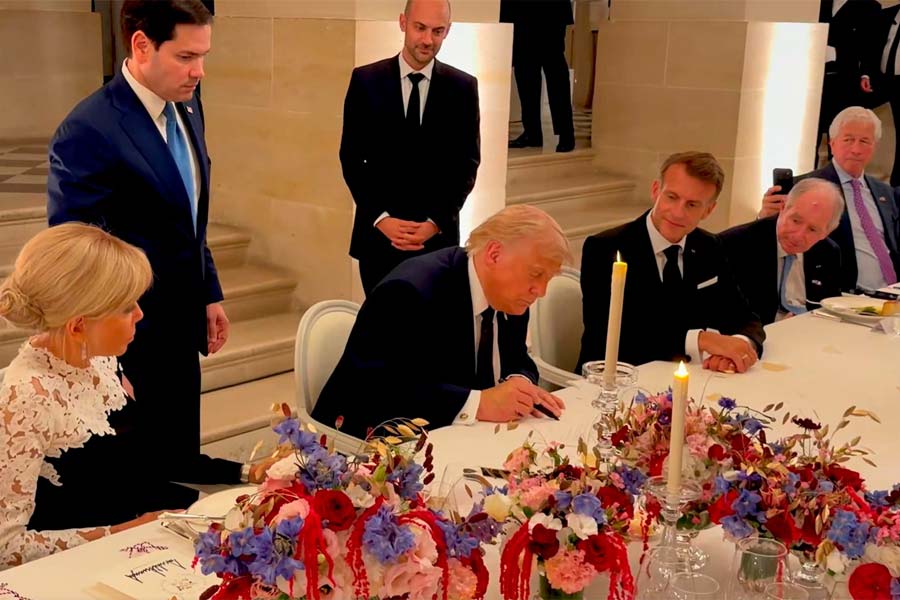
Three months after the start of the US and Israeli aggression against Iran and Lebanon, the American administration has signed an agreement with the Islamic Republic to end a war it has lost on all fronts. Signed by Trump in Versailles, where he was attending the G7 summit, the text leaves no room for doubt: it is a humiliating and unprecedented capitulation for US imperialism and a resounding victory for the Iranian regime. What was intended to be a swift and lethal military action to eliminate the fundamentalist state of the ayatollahs—which, let's not forget, was the objective of Netanyahu and Trump—has ended up becoming a complete military, diplomatic, and economic failure for Washington and Tel Aviv. Of course, China and Russia also emerge as indirect victors from this “peace.”
The US, with its tail between its legs
The terms of the agreement, jokingly called a “memorandum of understanding” to disguise the fiasco, are shocking. First, Trump lifts all sanctions on Iranian oil, eliminating existing restrictions on the banking, transportation, and insurance systems so that Tehran can trade with complete normality.
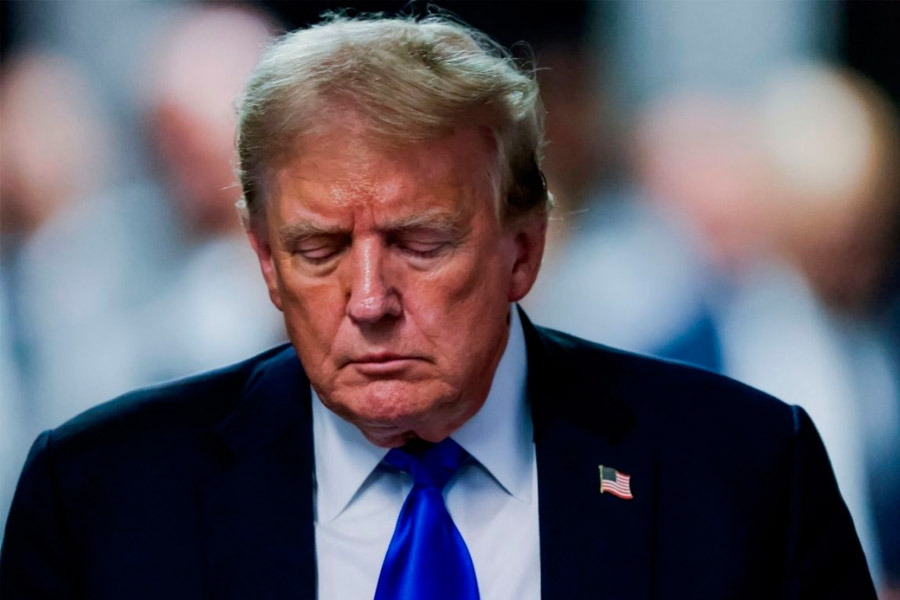
The agreement also stipulates that, following the next 60-day negotiation phase, “the United States of America commits to lifting all sanctions against the Islamic Republic of Iran—including those resulting from resolutions of the United Nations Security Council and the IAEA Board of Governors, as well as all unilateral U.S. sanctions, both primary and secondary—according to a timetable agreed upon as part of the final agreement.” These sanctions have crippled the Iranian economy since they were first imposed in 1979 and have been progressively tightened over the following decades. This point alone undoubtedly represents a resounding victory for the Iranian regime.
Secondly, as negotiations progress, the Islamic Republic's funds abroad, amounting to $100 billion, would be gradually released. This measure would immediately free up $24 billion, much of which is held in financial institutions in the United Arab Emirates (UAE)[1].
Third, “the United States of America, together with regional partners, commits to developing a definitive and mutually agreed plan, endowed with at least $300 billion, for the reconstruction and economic development of the Islamic Republic of Iran.” The terms of this point are so overwhelming that Vice President Vance has tried to downplay them by stating that Washington will not pay a single dollar to the Islamic Republic, and that it will be a fund made up of Gulf countries and private investors[2]. As if this, should it materialise, weren't already an unimaginable defeat just a few weeks ago!
Finally, the memorandum states that its entry into force will bring about the “immediate and permanent end of the war on all fronts, including Lebanon,” that is, an unequivocal setback for Netanyahu’s Zionist regime, which, as it has already indicated, will do everything possible to sabotage it. Furthermore, according to the memorandum, Lebanon’s territorial integrity and sovereignty will be respected, which would imply, once the subsequent negotiation process is complete, the withdrawal of Zionist troops from the south of the country.
The US commits to withdrawing its military forces near Iran within 30 days of the signing of the final agreement, which could mean the evacuation of some of the US bases in the region.
In exchange for all this, Iran commits to opening and demining the Strait of Hormuz, although its status and administration, that is, the possible collection of transit fees —something that did not happen before the war—, will depend on what the Islamic Republic and the Sultanate of Oman agree upon, in accordance with “international law”.
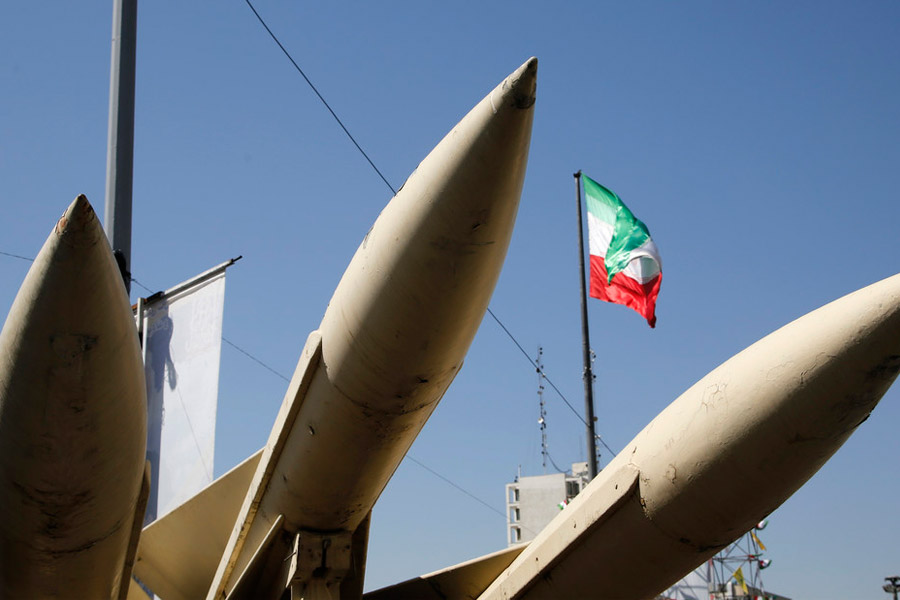
As for Tehran's concessions—the commitment not to develop nuclear weapons—Iran had already agreed to this in the agreement signed with Obama, which Trump broke. The ayatollahs have readily accepted the return of inspections of their nuclear program and "the reduction of the enrichment level in situ under IAEA supervision," or in other words, that the uranium stockpiles remain on Iranian soil. Another blow to American ambitions!
Finally, the agreement makes no mention of Iran's missile program, the elimination of which was one of the objectives publicly stated by both Trump and Netanyahu at the start of the war, nor of support for its allies in the region, including Hezbollah, the Houthis in Yemen, and the pro-Iranian militias in Iraq.
One more step in the decline of American imperialism
As we have been explaining, the Iran war has become yet another milestone in the decline of American imperialism. Following the humiliating withdrawal from Afghanistan, and the increasingly evident defeat in Ukraine, Iran has become the prime example of the enormous industrial and military weaknesses of American imperialism.
As numerous analysts have pointed out[3], this war has starkly revealed the enormous limitations of American power. Despite having the most powerful army on the planet, the largest defense budget, and cutting-edge missile technology and artificial intelligence applied to the military field, they have been thwarted by a regional power like Iran, which has obviously enjoyed the full support of China and Russia.
The US has spent nearly $30 billion in recent months on airstrikes and a naval blockade, bombing 13,000 targets and killing approximately 3,000 people. However, as US intelligence itself has acknowledged, 70% of the Islamic Republic's missile capabilities remain intact. All of this has depleted US missile and ammunition reserves, leading Secretary of Defense Pete Hegseth to declare that replenishing the stockpiles used in the war could take "months or even years," with the consequent impact on the arms race against China and Russia.
Iran has demonstrated that by producing thousands of low-cost drones—costing no more than $30,000 each—it can counter the latest generation of American missiles, which cost $3 million to produce, and inflict serious damage on US and Israeli defenses and interceptors. According to the Tel Aviv Institute for National Security Studies, Iran has launched more than 1,500 missiles and 4,700 drone strikes in the Middle East in recent months, hitting critical infrastructure in Gulf countries—causing $58 billion in damage that will take years to repair—and 17 US military bases, as well as embassies and other facilities.
The other weapon with which Iran has emerged after the conflict is the ability to close the vital Strait of Hormuz whenever it wishes. A recent US intelligence report stated: “We have ceded control of the strait to Iran, a tool more powerful than any nuclear weapon”[4]. According to the report, Iran has realized it has the capacity to close it at any time, and the consequences for the global economy, as has been demonstrated, put the US at a disadvantage. The report also notes that the Islamic Republic “has realized it can employ targeted attacks against the energy infrastructure of Gulf countries as an asymmetric tool… increasing Tehran’s future influence.”
In short, the White House underestimated the strategic power this would give Iran on the military front, and failed to take into account the energy shock, the possibility that a major blockade could trigger a global recession, and the deep crisis of confidence they have generated with their Gulf allies.
And this last point is another of the most significant. This war has exposed Washington's inability to protect key partners in a crucial area of the inter-imperialist struggle. Prominent NATO members, such as Germany, Great Britain, and France, have rejected direct and large-scale involvement. And this, without a doubt, constitutes a major setback and erodes Trump's credibility, as symbolized by the malicious smile of French President Macron when Trump signed the Treaty of Versailles.
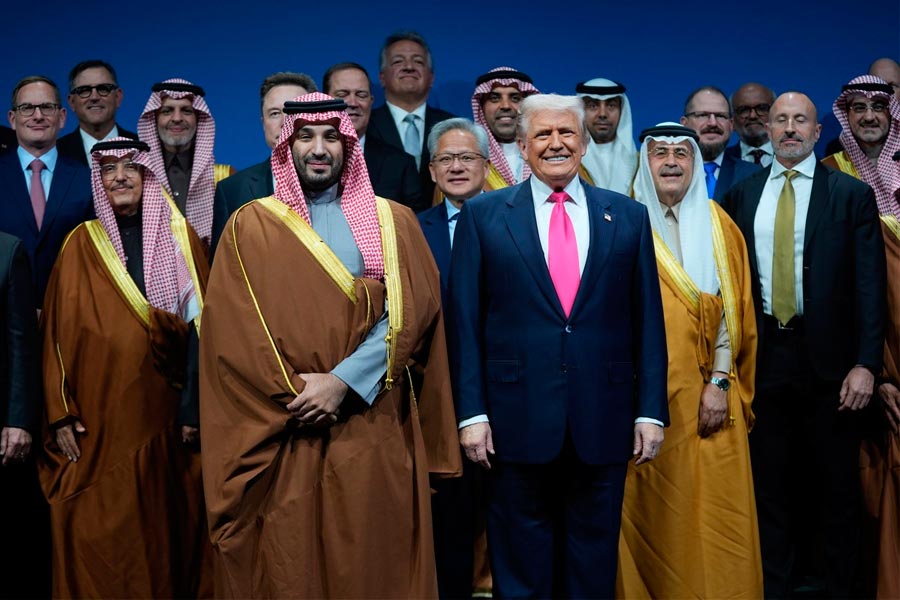
This outcome has serious consequences for the balance of power: not only it will increase the distrust of many allies toward Washington, but it will also strengthen China's role throughout the region. Saudi Arabia, which has received the fewest attacks from Iran, has already indicated its willingness to sign a broad non-aggression pact with the Tehran regime and to continue making progress in restoring diplomatic relations, which began three years ago.
Both China and Russia emerge from the conflict stronger, and the question mark over the American industrial and military capacity, and its true effectiveness when facing not Venezuela or Cuba, but states with a much more solid productive base, grows larger.
In the end, pressure from broad sectors of the American bourgeoisie and its NATO partners to guarantee the opening of the strait, and the critical internal situation facing Trump, with historically low approval ratings and the eve of a midterm election he may lose, have forced the US president to seal an agreement that represents a resounding failure.
This failure also extends to his key partner, Netanyahu, who sees how a war launched to extend his power in Lebanon and the entire region and guarantee his re-election has transformed into a remarkable fiasco that leaves him in a very weakened position, one that his more Nazi-like allies can exploit. That is why he has reserved the right to reignite the war in Lebanon when his interests require it.
It remains to be seen how events will unfold in the coming months. But a return to hostilities would create serious problems for Donald Trump. The situation has reached this point precisely because the contradictions, and the negative scenario facing Washington and the global economy, have left him no other option.
Netanyahu's criticisms have already been met with a firm response from Vice President JD Vance, who led the US negotiating team with Iran. In a press conference following the signing of the agreement, he warned the Zionist leader: "I wouldn't mess with the only powerful ally I have left in the entire world."
A few days ago, a series of phone calls to the Israeli prime minister were also leaked, in which the US president called Netanyahu a “fucking lunatic” and accused him of “not having a fucking shred of judgment.” This Thursday, in a message posted on social media, he launched another barb at the Israeli head of government: “The United States is committed to PEACE… we expect a total ceasefire on all fronts, including Lebanon, Hezbollah, and Israel.”
Returning to square one is not a credible prospect, despite Zionist pressure. In any case, the agreement between the US and Iran is by no means the end of barbarism, wars, and genocide. The imperialists' peace is the prelude to new battles for control of markets, essential raw materials, and geostrategic areas, and the peoples of the world will pay a heavy price for it.
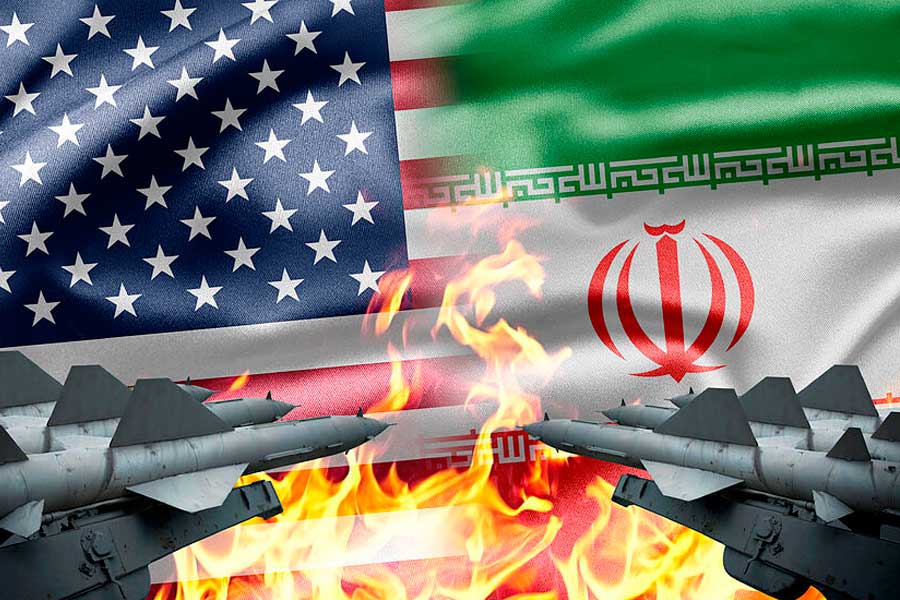
The growing decline of the US, as has happened at many points in history with other empires in retreat, will bring more chaos and barbarity. Washington will never accept surrender its supremacy and therefore unleashes as much destruction as possible in every corner of the planet. But what it cannot prevent is that this systematic use of violence to defend its position will have the opposite effect and ignite the international class struggle.
We reproduce the memorandum in its entirety as it was read by a senior official of the Trump Administration and published by the international press[5]:
1. The United States of America and the Islamic Republic of Iran, as well as their allies in the current war, by signing this Memorandum of Understanding (MoU), declare the immediate and permanent cessation of military operations on all fronts, including Lebanon, and undertake henceforth not to initiate any war or military operation against each other, to refrain from threatening or using force against each other, and to guarantee the territorial integrity and sovereignty of Lebanon. The final agreement will confirm the permanent end of the war on all fronts, including Lebanon, as well as the other provisions of this paragraph.
2. The United States of America and the Islamic Republic of Iran undertake to respect each other's sovereignty and territorial integrity and to refrain from interfering in each other's internal affairs.
3. The United States of America and the Islamic Republic of Iran undertake to negotiate and reach a final agreement within a maximum period of 60 days, extendable by mutual consent.
4. Immediately upon the signing of this MoU, the United States of America will begin lifting the naval blockade and removing any disturbance or obstacle against the Islamic Republic of Iran, fully ending the naval blockade within 30 days. During this period, shipping traffic will be proportional to the pre-war traffic levels that the Islamic Republic of Iran is restoring. Furthermore, the United States of America undertakes to withdraw its forces from the vicinity of the Islamic Republic of Iran within 30 days of the signing of the final agreement.
5. Following the signing of this MoU, the Islamic Republic of Iran will undertake the necessary steps, using its best efforts, to allow the safe and free passage of commercial vessels for 60 days, from the Persian Gulf to the Gulf of Oman and vice versa. Commercial vessel traffic will commence immediately and, taking into account the need to remove technical and military obstacles and carry out demining operations by the Islamic Republic of Iran, will be fully established within 30 days. The Islamic Republic of Iran will hold a
dialogue with the Sultanate of Oman to define the future administration and maritime services in the Strait of Hormuz—in consultation with other coastal states of the Persian Gulf—in accordance with applicable international law and the sovereign rights of the coastal states of the Strait of Hormuz.
6. The United States of America, together with regional partners, commits to developing a definitive and mutually agreed plan, endowed with at least $300 billion, for the reconstruction and economic development of the Islamic Republic of Iran. The mechanism for implementing this plan will be finalized as part of a definitive agreement within 60 days. The United States of America will grant all necessary licenses, exemptions, and permits for the relevant financial transactions.
7. The United States of America commits to lifting all sanctions against the Islamic Republic of Iran—including those resulting from United Nations Security Council and IAEA Board of Governors resolutions, as well as all unilateral U.S. sanctions, both primary and secondary—in accordance with a timetable agreed upon as part of the final agreement. The Islamic Republic of Iran and the United States of America recognize the critical importance of the aforementioned sanctions lifting issue and express their intention to address these matters immediately in the negotiations in order to reach a mutual agreement on this matter.
8. The Islamic Republic of Iran reaffirms that it will not acquire or develop nuclear weapons. The United States of America and the Islamic Republic of Iran have agreed to resolve the disposition of stockpiled enriched material through a mutually agreed mechanism, in accordance with the timetable mentioned in paragraph seven, establishing as a minimum methodology in-situ down-blending under IAEA supervision. Both parties also agreed to discuss the issue of enrichment and other mutually agreed matters related to the nuclear requirements of the Islamic Republic of Iran, based on a satisfactory framework to be agreed upon in the final agreement. The final agreement will confirm the provisions of this paragraph. The United States of America and the Islamic Republic of Iran recognize the critical importance of the aforementioned nuclear issues and express their intention to address them immediately in negotiations in order to reach a mutual agreement on them.
9. Pending a final agreement, the United States of America and the Islamic Republic of Iran agree to maintain the status quo. The Islamic Republic of Iran will maintain the current status quo of its nuclear program, and the United States of America will not impose new sanctions or deploy additional forces in the region.
10. The United States of America undertakes that, immediately after the signing of this Memorandum of Understanding and until the lifting of sanctions, the U.S. Department of the Treasury will issue exemptions for the export of Iranian crude oil, petroleum products and derivatives, as well as all associated services, including banking, insurance, transportation, etc.
11. The United States agrees to make available the frozen or restricted funds and assets of the Islamic Republic of Iran upon implementation of this Memorandum of Understanding. The United States and the Islamic Republic of Iran will mutually agree on the procedures for releasing these funds during the negotiations. These funds, whether they remain in the original account or are transferred, will be available for payment to any ultimate beneficiary designated by the Central Bank of the Islamic Republic of Iran. The United States agrees to issue all necessary licenses and authorizations.
12. The United States and the Islamic Republic of Iran agree to establish an executive mechanism to monitor the successful implementation of this Memorandum of Understanding and future compliance with the final agreement.
13. After the signing of this Memorandum of Understanding and once the implementation of paragraphs 1, 4, 5, 10 and 11 of this Memorandum has begun and the implementation of these measures has continued, the United States and the Islamic Republic of Iran will begin negotiations on the final agreement, focusing exclusively on the other paragraphs.
14. The final agreement will be ratified by a binding resolution of the United Nations Security Council.
Footnotes:
[1] Exclusive: UAE to unlock billions of dollars for Iran, sources say.
[2] A Marshall Plan for Iran. La Vanguardia, June 17.
[3] What we just learned about American power. New York Times, June 17.
[4] US intelligence assessment: Iran can close the Strait of Hormuz whenever it wants.
[5] Texto íntegro del memorando de entendimiento entre Estados Unidos e Irán