




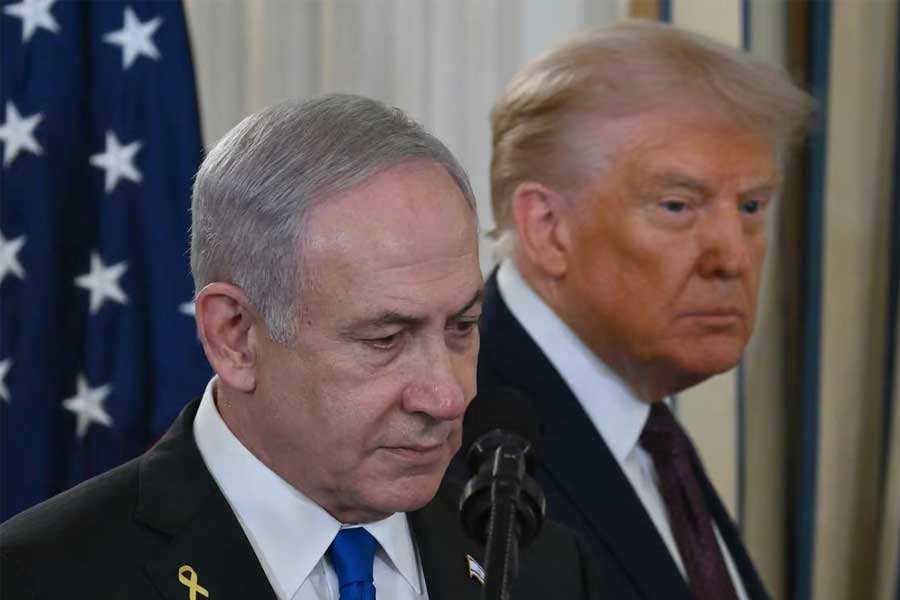
The war with Iran has become a dead end for the US. Six months after the start of military operations, both Trump and Netanyahu have been exposed, unable to achieve any of their stated goals: halting Iran's nuclear program and eliminating its missile capabilities, and ultimately, bringing about regime change. After intense bombing, thousands of deaths, and an increasingly worrying disruption to the global economy resulting from the closure of the Strait of Hormuz, US imperialism was forced to capitulate and sign a memorandum of understanding that amounted to a complete humiliation.
Although this agreement has so far died down, the US administration has been unable, beyond a few propaganda bombings, to continue its war of aggression. Its inability to break the Iranian regime's back is directly related to growing military difficulties emerging from the depletion of its missile and ammunition stockpiles. These military limitations, exacerbated by four years of conflict in Ukraine, have only served to highlight the increasingly worrying industrial shortcomings of the US. War is ultimately about concentrated economics, and Washington's difficulties cannot be separated from its economic decline in the face of the Chinese giant.
The other aspect to highlight, as we have already mentioned in our statements, is the complete international isolation of Trump and his Zionist ally in this new imperialist adventure. Firstly, regarding their European partners, who had to step forward, including Great Britain and Germany, completely disassociating themselves from this military intervention. But not only them. The other major victims have been the Gulf monarchies, not even consulted, whose infrastructure has been severely damaged by Iranian missiles and drones, seriously paralyzing oil refining, while their economies have entered recession. The supposed American protection has become a fiction, leading many of these countries to reconsider what kind of relationship they should maintain with US imperialism. This reality could push the region even further toward Chinese imperialist interests.
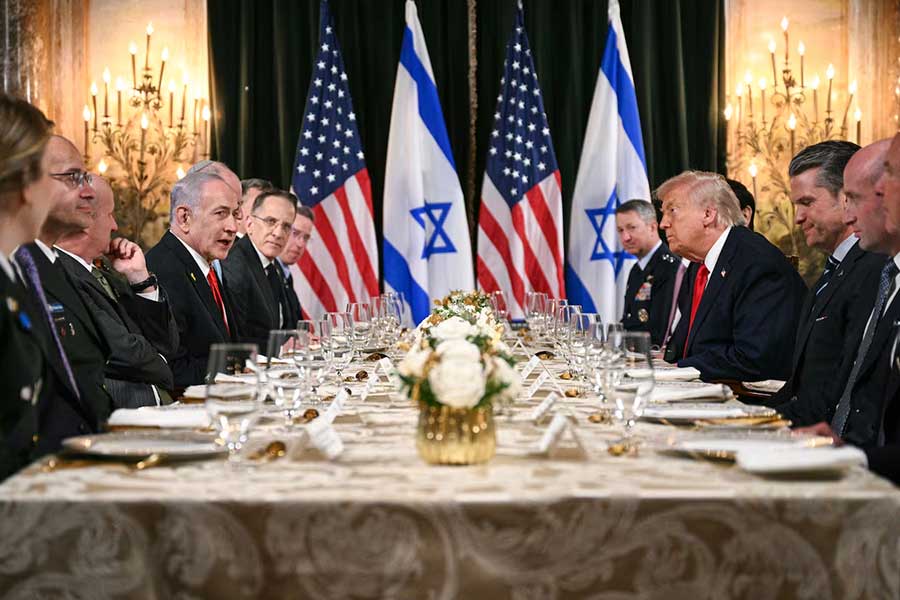
Will the sanctions against Iran be successful?
Following the Trumpian strategy of trying to hide setbacks on the battlefield with increasingly grandiose and apocalyptic threats, the US government has just announced a package of economic sanctions against Tehran that US Treasury Secretary Scott Bessent describes as "the largest financial offensive ever launched against an adversary" and as the "economic D-Day," equating it to the Normandy landings in World War II.
The truth is that behind this rhetoric lies the impotence of American imperialism, incapable of delivering new blows that would allow it to make serious progress, either militarily or economically. For starters, Iran is already so heavily sanctioned that it's difficult to find new ways to harm it. Furthermore, these threats largely exclude its essential partner: China, its main oil buyer, and specifically its state-owned banks.
A good example of the limitations of these sanctions is what has happened with Russia, which has been able to circumvent them thanks to its increasingly strong alliance with China. This has meant abandoning the dollar in its trade relations, adding further problems to the already weakened US hegemony.
It's worth remembering that the first round of economic sanctions against Iran was initiated by President Jimmy Carter in 1979, when he froze Iranian assets worth $12 billion (equivalent to more than $55 billion today). In 1995, Clinton prohibited all American trade and investment in Iran, and the following year imposed sanctions on companies from any country worldwide that invested more than $20 million annually in Iranian oil and gas infrastructure.
Already in this century, the US banned Tehran in 2008 from any type of transaction in dollars and, shortly afterwards, by exerting strong pressure on its European partners, managed to completely exclude it from the SWIFT system of international payments, thus preventing any type of payment or collection from or to this country.
As if these measures did not completely stifle it, since they continued to allow payments and collections in currencies other than the dollar, in 2012 the US Congress decided to sanction any foreign bank that dared to facilitate any type of transaction with the Ayatollahs' regime.
Between 2015 and 2018, these sanctions were lifted in exchange for limiting uranium enrichment to civilian uses. But in 2018, President Trump unilaterally decided to reinstate them and enforce them with the utmost rigor.
Despite a serious deterioration of its economic situation and a severe impoverishment of its population, it was able to survive thanks to banks and companies, with the barely disguised cover of governments around the world, who saw an opportunity to do good business by helping to circumvent the lockdown measures.
That is why the new sanctions campaign is directed squarely against its trading and financial partners, especially against buyers of Iranian oil and against countries that facilitate its maritime transport or process the corresponding payments.
The first target of American verbal fury has been Oman, threatened by Trump on August 17 with being “bombed to bits” if it continued collaborating with Iran on a joint project to establish a toll for ships transiting the Strait of Hormuz. Weeks have passed, the “massacre” has not materialized, and the Omani government—which hasn't even bothered to respond—continues its negotiations with Tehran as if nothing had happened.
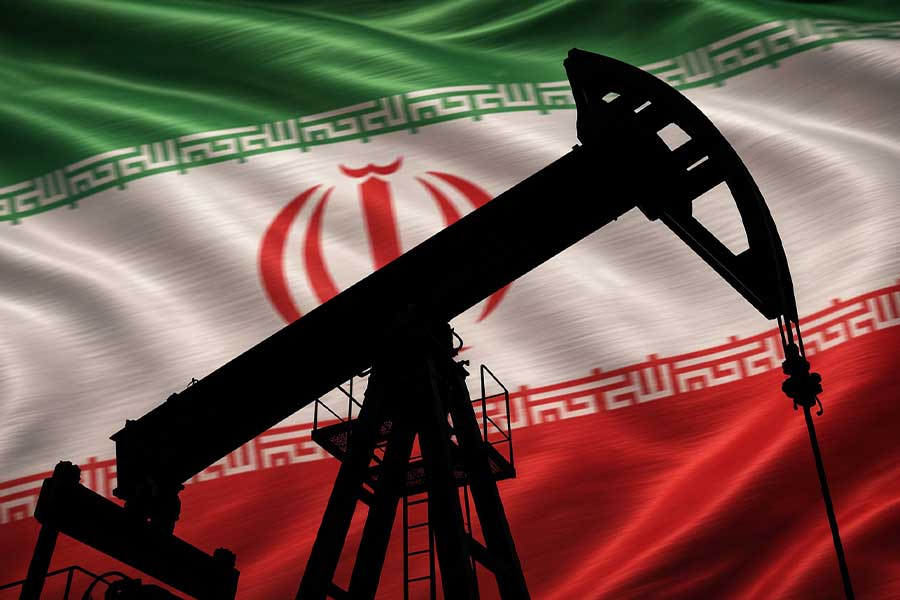
Nor have the vast majority of its trading partners flinched. Turkey, India, the European Union, Pakistan, Russia, Iraq, and Azerbaijan, among others, have so far shown not the slightest indication that they will back down in the face of threats. The Chinese government, however, has spoken out in very firm terms against the threat of sanctions. When Trump unleashed his failed tariff offensive, it demonstrated its ability to decisively put a stop to the Washington bully. Perhaps to avoid repeating such a bitter experience, Chinese banks and
large state-owned enterprises have been left off the list of companies threatened by the US[1], a clear indication that this economic attack is headed toward another American failure.
The only “victory” Trump can claim is that he has gotten the United Arab Emirates to completely cut off its trade and diplomatic ties with Iran. While it may seem strange, despite Iran's military actions and missile attacks, the UAE was its largest supplier of goods—30.65% of Iranian imports came from the UAE—and the third-largest destination for its exports, after China and Iraq. All indications are that other countries will quickly take its place, and the only losers in this operation will be the Emirati companies and banks that did good business with their neighbour across the Persian Gulf.
Trump fails on all fronts
But Trump faces not only military defeat at the hands of the Iranian regime and its allies, Russia and China, but also a genuine economic disaster that could cost him the midterm elections. The closure of the Strait of Hormuz, a key route for global trade that before the attack was open to unrestricted navigation, has led to a sustained surge in the price of fossil fuels, both oil and natural gas, and agricultural fertilizers. The threat of runaway inflation is keeping central bankers around the world up at night. Meanwhile, the US debt, which has just reached $40 trillion, weighs heavily on the American and global economies. Despite Trump's promises to reduce it, in his first year and a half in office, partly due to increased military spending, the debt has grown by more than $3 trillion.
The trajectory of the American economy, and the outcome of its competition with China for global hegemony, revolves almost exclusively around a massive and necessarily growing flow of investment in everything related to the development and exploitation of Artificial Intelligence. This massive investment, with its increasingly pronounced speculative character, has reached dimensions that surpass previous catastrophic financial bubbles.
Under these conditions, an interest rate hike in the US could unleash a torrent of disastrous consequences. The recent—and unsuccessful—manoeuvres by the US Treasury Department to curb the rise in yields on its long-term government debt, first by providing liquidity to support the value of the yen, thus preventing a massive sell-off of US securities held by Japanese institutions, and then by repurchasing its own bonds, in open contradiction to the plans of the Federal Reserve (Fed), testify to the fear among leading circles of US capital of entering a spiral of defaults and bankruptcies of incalculable proportions.
In the European Union, Trump's war adventure has not only revived the inflationary threat, as anyone can see just by going shopping, but has also caused a trade deficit of 21.8 billion euros in the second quarter of the year, the first since 2023.
For all oil-importing countries, the Centre for Research on Energy and Clean Air (CREA), an independent think tank based in Helsinki, estimates that since the start of the US aggression in February 2026, importing countries have had to pay an additional $330 billion (approximately €282 billion) to purchase fossil fuels. Sooner rather than later, the cost of this damage will fall on the shoulders of the working class worldwide, impoverishing us even further.
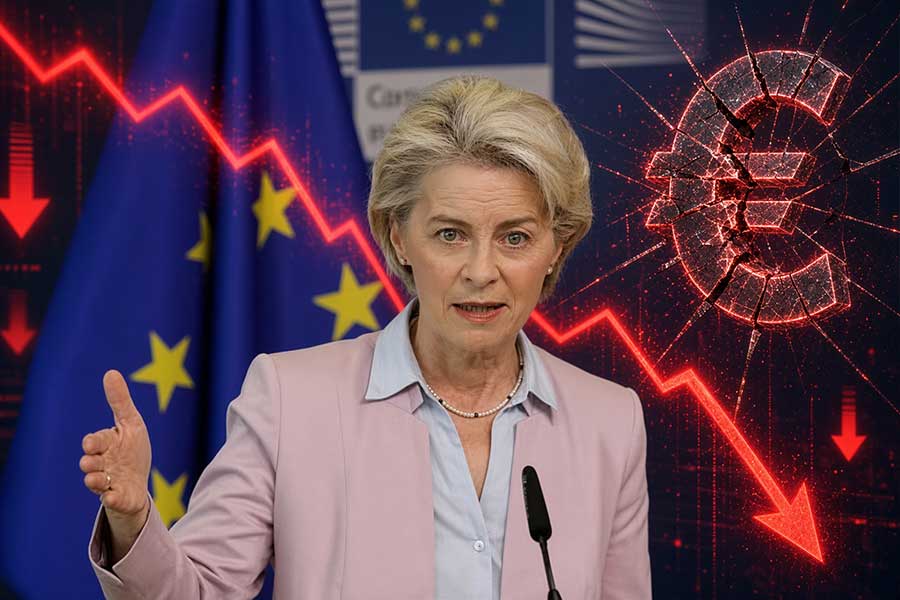
But it is not only the American economy that is paying the price for its military failure. The US position in the global geopolitical balance, and especially in the Middle East, has been clearly damaged. A recent article in Foreign Affairs[2] summarized the situation created by Israel's destruction of Gaza and the US-Israeli war with Iran with these words: "together they have dealt a death blow to the American Middle East".
For countries that, with varying degrees of enthusiasm, accept the military protection provided by Washington, the realization of its military weakness has become an incentive to explore new alliances. The acknowledgement that US munitions reserves are dwindling and that its replenishment capacity is severely limited, due to the decades-long deterioration of its industrial base, raises serious questions about the US's actual capacity to intervene in other geographic areas.
For countries with aspirations to become regional powers, the growing weakness of the American colossus encourages them to go further and further in their plans, disregarding the risk of angering the, for the moment, great global hegemonic power.
Until now, the US clearly imposed its decisions on the Arab monarchies of the Persian Gulf. That power is visibly crumbling.
Saudi Arabia and the United Arab Emirates, which have been clashing for several years in Yemen and Sudan by supporting opposing factions in the civil war that is destroying both countries, and in Somalia, where the UAE supports the independence claims of Puntland and Somaliland, have taken new and decisive steps in their confrontation.
The UAE, severely punished by Iranian counterattacks and facing serious doubts about its future as the Gulf's leading financial, commercial, and tourism centre, has chosen to place itself unconditionally under US protection. Its rapprochement with Israel and its subordination to Israeli expansion plans in Africa are an imposition by its American protector, as was its withdrawal from OPEC in May 2026, in a thinly veiled attack on Saudi Arabia's central role in the global hydrocarbon market.
As expected, Saudi Arabia, which has thus far resisted US pressure to recognize Israel, has opted to seek other avenues for military protection. Expanding upon the mutual defence agreement signed with Pakistan in 2025, Saudi Arabia promoted a broader agreement this August that also includes Turkey. Revealingly, the clause from the 2025 agreement excluding nuclear weapons from the scope of the pact has been removed. Pakistani troops have already been deployed in Saudi Arabia to implement the agreement.
Undoubtedly, the possibility of Saudi Arabia and Turkey acquiring nuclear weapons is very remote today, but the dynamics of events in the Middle East, with Israel having possessed such weapons for years and becoming increasingly aggressive towards Turkey, and with the US powerless to unilaterally impose its will, do not allow us to categorically rule out that prospect.
Although the US has had no choice but to put on a good face for the agreement, experts from the Atlantic Council, an entity that brings together the most powerful financiers and businessmen from the US and its allies, along with a good number of former political and military leaders from those countries, have highlighted that this pact “reduces the incentives for Saudi Arabia to seek security guarantees from the US in exchange for normalizing relations with Israel”[3].
In the coming months, we will witness further consequences of this military defeat. Countries like Taiwan and the Philippines, which unconditionally entrusted their security to the US military umbrella, must now be reassessing the advantages and disadvantages of this subordination to a power in decline.
In this respect, what has just happened in South Korea is very significant, where the US military has abruptly and unexpectedly abandoned ongoing military exercises without a clear explanation. The American Enterprise Institute, another think tank of US imperialism, points to Washington's unease with the substantial investments that South Korean technology companies, such as Samsung and SK Hynix, are making in China as a factor in this decision, thus strengthening the Chinese AI ecosystem[4].
Just a few days ago, Reuters announced that the US is preparing to issue an ultimatum to its trading partners: in the war against China for control of AI, they must choose sides because the US will not allow double-dealing[5]. We will see if this threat materializes, but what is certain is that the position of strength the US held in the world until recently has weakened to the point where these kinds of threats could backfire on its own interests.
Pending further developments, all indications are that the US's desperate attempts to maintain a hegemony that is rapidly crumbling are not only increasing the risk of accelerating its own decline, but are also exacerbating the problems and imbalances of the global economic system. The US is currently the greatest source of instability on the planet, while China, its main competitor, is strengthening its position as a reliable and stable partner day by day. In any case, in the short term, US policies are exacerbating conflicts and social tensions in much of the world. We revolutionary communists must prepare to intervene with the utmost boldness in the new wave of class struggle that is approaching.
Grades:
[1]Las sanciones de EE UU para aislar la economía de Irán excluyen entidades clave
[2]The End of the American Middle East
[3]The Mecca Joint Defense Agreement and the future of regional security
[4]He Advocated Limitations of Public Power
[5] US to tell partners they must pick sides in AI race with China