




Nearly 500 protesters have been killed, and the number of detainees could exceed 10,000 as of January 11th, in the repressive crackdown on the popular uprising sweeping Iran, which has brought the Mullahs' regime to its knees. The uprising, which is permeating all levels of society, has colossal implications for the Middle East and the world, at a time of fierce struggle for global hegemony between China and the United States.
As with the US military intervention in Venezuela, and the immediate developments that followed, we must approach events in Iran with a class-based and internationalist analysis, putting forward a socialist alternative to the maneuvers and propaganda of the various imperialist blocs.
As is well known, the protests began on December 28th, when merchants from Tehran's Grand Bazaar --historically the sector that has most strongly supported the Mullahs' regime-— took to the streets of the city to protest soaring prices and the meteoric devaluation of the national currency, the rial. The sudden involvement of thousands of merchants immediately encouraged other sectors of the population that had played a prominent role in previous mobilizations, especially the youth and women, leading to the spread of the protests nationwide. According to various reports, demonstrations have erupted in more than 100 cities across all 31 provinces.
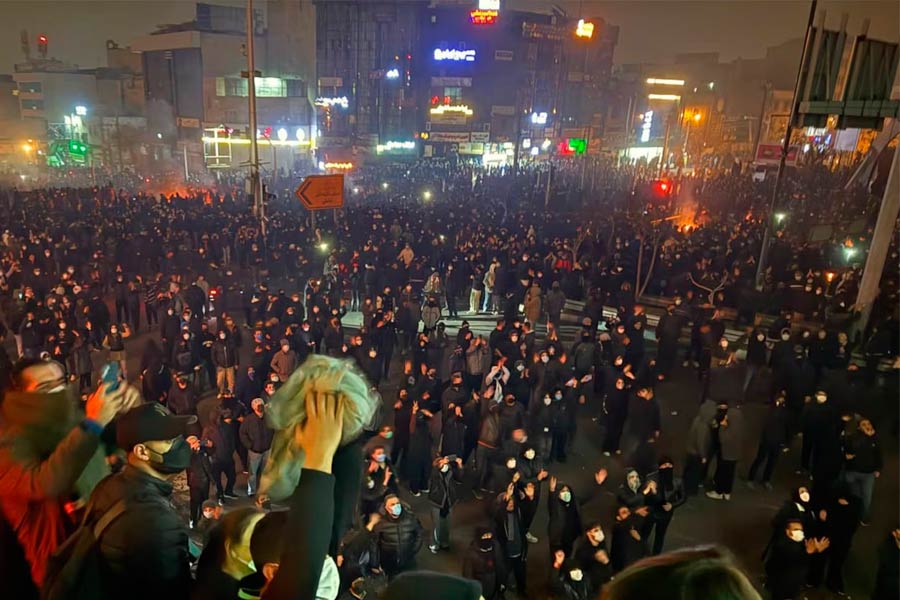
The ferocity of the clashes in the streets, where armed protesters have been seen confronting police forces, reveals a step forward compared to the 2022 uprising sparked by the death in custody of Mahsa Amini, a young Kurdish woman arrested by the morality police for not
wearing her hijab correctly. On that occasion, the repression by security forces was also extremely violent, resulting in more than 550 deaths and another 20,000 arrests.
The strength of the current rebellion has been fueled by multiple factors. On the one hand, the regime attempted to make some concessions to try to calm tensions, such as paying a monthly subsidy of $7 to 71 million people to help them cope with the cost of living. But this concession, laughable given the rampant inflation, was widely perceived as charity and ignited the protests further.
The fury of the hundreds of thousands mobilizing in the streets has been fueled by years of deprivation, social setbacks, and brutal repression of the most basic democratic rights. In fact, among young people, adherence to the religious and fundamentalist “values” of the Mullahs’ capitalist regime is very limited compared to the widespread rejection of government corruption. Increasingly, the social base of the theocratic dictatorship has shrunk, leaving the government with no support other than the military and police apparatus.
The alliance with China fails to stem the crisis of Iranian capitalism
All the upheavals over the past fifteen years stem from the deep crisis of Iranian capitalism, a crisis that the political and economic alliance with China has failed to reverse.
On the one hand, the fall in oil prices, on the other, the severity of the sanctions imposed by US imperialism, and added to these factors, the parasitic nature of the Iranian bourgeoisie, firmly aligned with the Mullahs, has led to a critical situation. To preserve the profits of the ruling class, the Mullah regime insists that the population pay for the crisis through a policy of constant social cuts and attacks on their living conditions, which is also essential to sustain a police state that consumes enormous resources.
Although the sanctions imposed by the US are causing significant harm, the Iranian economy has been stagnating for a long time. According to World Bank data, its GDP could contract by 4.4% in 2025, following a 0.6% decline in 2024. Given that the entire Iranian economy has been restructured around India, Russia, and China -—countries that do not comply with the sanctions and that account for 80% of Tehran's oil exports—- the drop in prices has hit it hard: from selling a barrel for $100 in 2023, it is now selling for $55. If we add to this the discounts of around 8% required for its trading partners, mainly China, to purchase the oil, we can begin to grasp the brutal drain on revenue this represents.
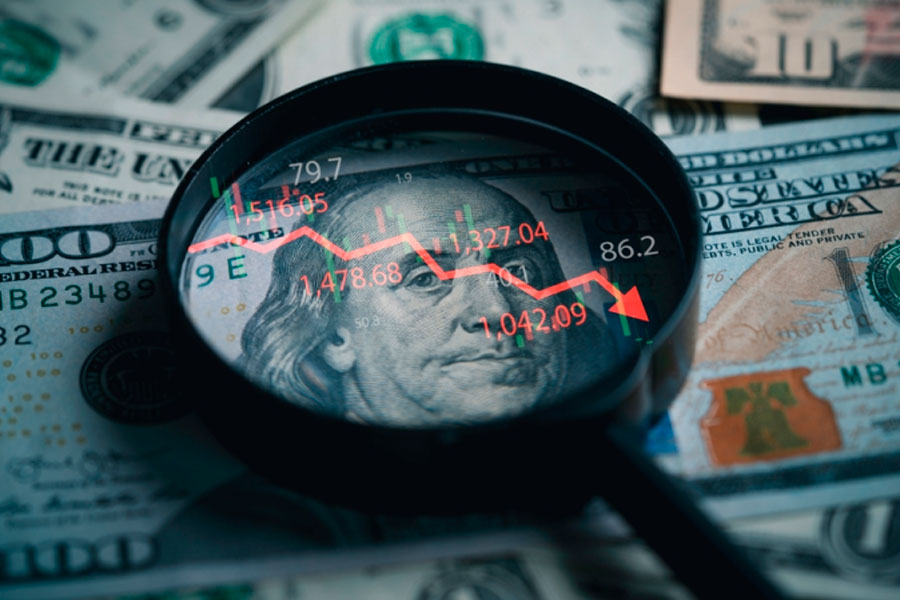
For years, the Iranian economy has suffered a dramatic reduction in dollar inflows, and this is what underlies the dramatic devaluation of its national currency and the hyperinflation plaguing the population. The end result is that in November 2025, the market exchange rate was 600,000 rials per dollar, and in January 2026 it was 1.4 million rials per dollar, representing a drop of almost 75% in value. Although the official inflation rate indicates an increase of around 40%, in everyday life the prices of essential goods have doubled or tripled.
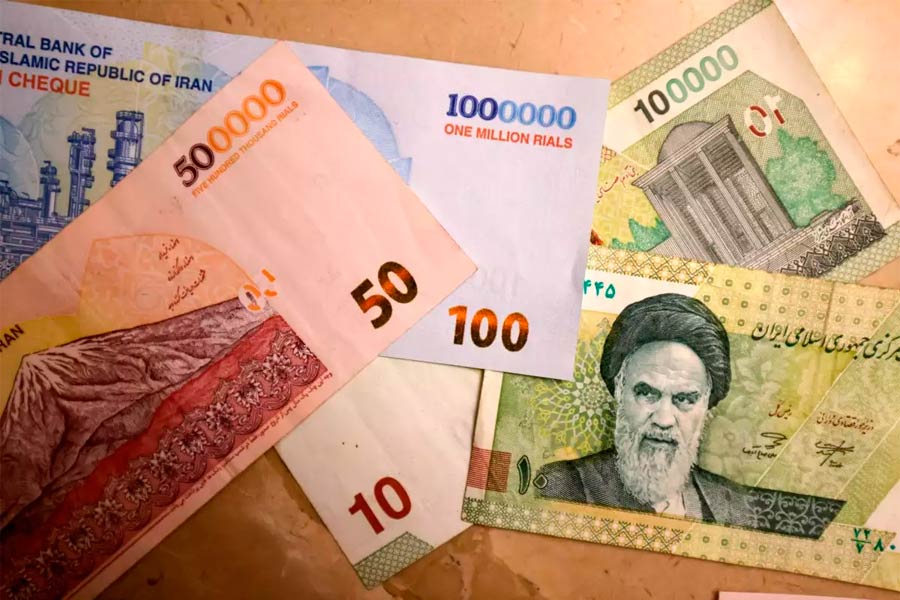
Faced with falling foreign currency earnings and a growing state deficit, the government responded by imposing a policy of austerity and spending cuts in 2024-25, which exacerbated the situation. The 2026-27 budget, which raised taxes on small and medium-sized enterprises (SMEs) and cut salaries for civil servants and pensioners, was the final straw, adding to other factors that have created the conditions for this social explosion: a chronic energy crisis due to low investment in electrical infrastructure, which led to blackouts across the country and reduced productive capacity, and a persistent drought resulting from the climate crisis, which has even led the government to consider relocating the capital, Tehran, to a more favorable location to guarantee the water supply.
Iran is a key strategic ally for China, with which it has signed $400 billion in investments for the next ten years, and has become one of its key oil suppliers. Hence, in the struggle for global hegemony, in the division of spheres of influence, the fall of the Iranian government and its replacement by another compliant with US interests would be an exceptionally hard blow for China.
Underlying this situation is an objective fact: the ties forged with China have not alleviated the plight of the Iranian people. This once again refutes all those who attempt to portray the Asian giant as a non-imperialist power, governed by a dynamic and compassionate "market socialism." The current wave of discontent is also a response to this left wing that refuses to see beyond its own nose and has just been shocked by the events in Venezuela, in which China and Russia have been passive accomplices.
For a socialist solution against the regime of the Mullahs and the intervention of Western imperialism
Shortly after the imperialist attack on Venezuela and the kidnapping of Nicolás Maduro, Trump threatened the Iranian government again, stating that “if they violently kill peaceful protesters, the United States of America will come to their rescue,” adding that he was “ready and prepared to act.” This came seven months after Israeli and US forces bombed Iranian nuclear facilities in a 12-day war and perpetrated a genocide in Gaza that has claimed the lives of hundreds of thousands of Palestinians.
We revolutionary communists categorically reject the imperialist intervention plans in Iran, as well as the actions of CIA and Mossad agents within the country to manipulate these mobilizations for their own political and geostrategic interests. We also take a firm stand against the attempts by the right-wing opposition abroad to exploit the situation, which has once again raised the demand for the restoration of the Shah's dynasty. US imperialism and its lackeys in Iran are sworn enemies of the people; therefore, no form of collaboration or support, direct or indirect, for these reactionary forces can be accepted.
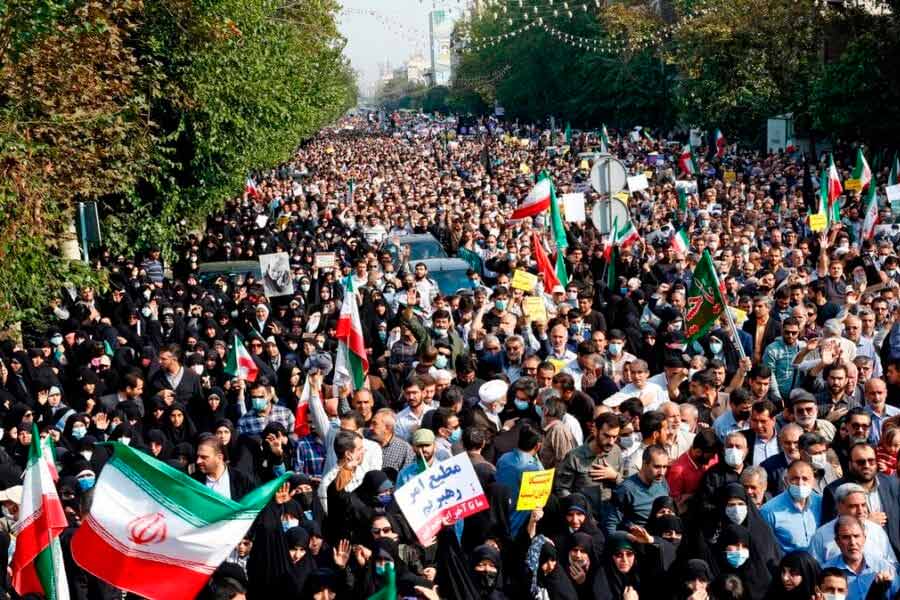
Trump's statements have also served as justification for the Mullah regime to intensify repression, accusing the protesters of acting in concert with the regime's enemies. But far from frightening the population, the official declarations further inflamed passions and fueled the demonstrations.
Iran's theocratic government is not in the least bit progressive. It aggressively defends the interests of the Iranian bourgeoisie and the privileges of a caste of officials entrenched in an omnipresent state apparatus, in which the military commanders --particularly the Revolutionary Guards-- exploit and plunder the country's resources for their own benefit. In order to do so, this caste maintains control, like a state within a state, over entire sectors such as oil, the foreign exchange market, telecommunications, arms production, as well as engineering and construction.
The coming weeks will reveal whether the movement takes on an insurrectionary character or is brought under control by the regime at the cost of a monumental bloodbath. The Iranian working class, its most advanced and vanguard sectors, must adopt a policy of class independence: rejecting the threats of intervention from US imperialism, which, if materialized, would drag the country back to the colonial era under the Shah. And, at the same time, they must understand that the Mullah regime can only be defeated for the benefit of the people by seizing power under the banner of socialist revolution and overthrowing capitalism. An Iranian revolution along socialist lines would unravel the thread of history interrupted in 1979 and send a powerful message to the oppressed peoples of the Middle East and around the world.